Bedside Commode
A bedside commode should be fitted to the person and positioned to support a safe transfer. It requires a clear cleaning, emptying and infection-control plan.
Overview
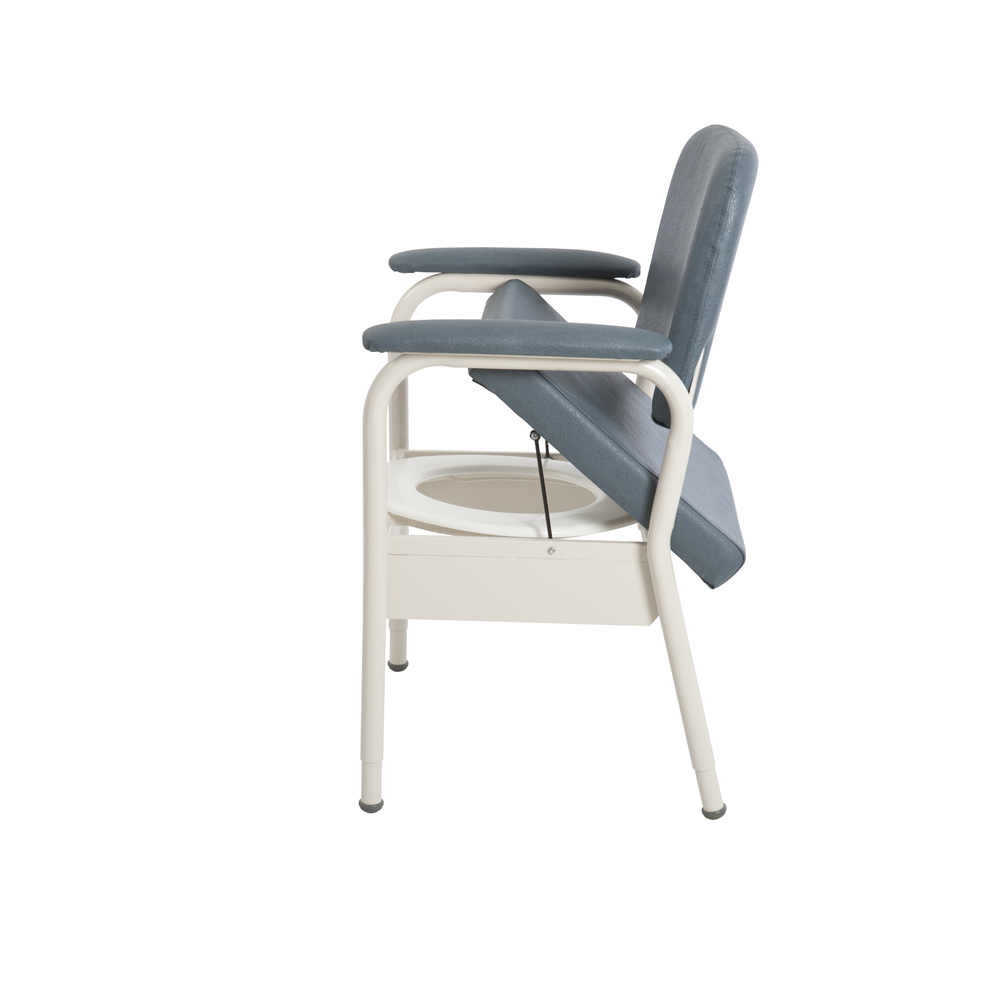
A bedside commode is a static toilet chair with:
- Toilet seat
- Removable bowl
- Lid
- Armrests
- Height-adjustable legs
- Removable or fold-away padded seat on some models
It is positioned near the bed for people who cannot safely or comfortably access the bathroom.
Purpose
- Reduce night-time walking
- Reduce falls risk
- Support toileting during illness or recovery
- Support palliative care
- Reduce urgency-related accidents
- Reduce carer assistance over long distances
- Provide temporary toileting where the bathroom is inaccessible
Who May Benefit
- Reduced mobility
- Reduced endurance
- Urgency
- Night-time falls
- Difficulty reaching the toilet
- Temporary post-operative limitation
- Bedroom located far from bathroom
- Palliative or end-of-life care
- Unsafe bathroom access
When It May Not Be Suitable
- Person cannot transfer safely
- Person requires a hoist but the space is inadequate
- Severe sitting instability
- Person repeatedly forgets the commode location
- Cleaning cannot be managed
- Bedroom privacy is inadequate
- Odour or infection-control concerns cannot be addressed
- Commode obstructs emergency access
- Person is likely to mistake it for another chair
How to Choose
Seat Height
Set the height so that:
- Feet are supported
- Hips and knees are positioned appropriately
- The person can sit and stand safely
- The bed-to-commode transfer is manageable
- The user does not perch
Example Aspire ranges include:
- Classic bedside commode: toilet seat height about 475–600 mm
- Deluxe bedside commode: toilet seat height about 435–585 mm
Check the exact product.
Seat Width
Check:
- Hip clearance
- Armrest access
- Clothing
- Carer access
- Safe working load
Armrests
Armrests should:
- Support controlled lowering
- Assist standing
- Be reachable
- Avoid shoulder elevation
- Remain stable
Bowl
Check:
- Capacity
- Lid
- Carry handle
- Ease of removal
- Splash risk
- Cleaning method
- Compatibility with disposable liners if used
Frame
Choose:
- Stable frame
- Non-slip rubber tips
- Height-adjustable legs
- Easy-clean surfaces
- Adequate safe working load
- Bariatric model when required
Positioning Beside the Bed
Place the commode:
- On the person’s preferred transfer side
- Close enough to reduce steps
- Far enough to allow safe turning
- Clear of the bed mechanism
- Clear of cords and rugs
- With adequate carer space
- With a light available
- With toilet paper and hygiene supplies within reach
Do not place it where it blocks:
- Bedroom exit
- Walking path
- Hoist access
- Emergency access
- Bed adjustment
Transfers
Assess:
- Standing transfer
- Pivot transfer
- Slide-board transfer
- Hoist transfer
- Bed height
- Commode height
- Walking-aid placement
- Clothing management
- Night-time cognition
- Orthostatic symptoms
How to Use
Before Use
- Check stability.
- Confirm all rubber tips are secure.
- Insert the bowl correctly.
- Place the lid and padded seat as required.
- Keep the floor dry and clear.
- Arrange lighting.
Transfer
- Approach using the prescribed method.
- Turn until the legs touch the seat.
- Reach for the armrests.
- Lower slowly.
- Keep feet supported.
- Complete clothing management safely.
After Use
- Replace the lid.
- Empty the bowl promptly.
- Clean and dry the bowl.
- Clean the seat and armrests.
- Wash hands.
- Return the commode to the prescribed position.
Risks and Considerations
- Commode movement
- Incorrect height
- Missing rubber tips
- Falls during night transfers
- Poor lighting
- Urine or faecal spillage
- Infection
- Odour
- Skin contamination
- Carer manual handling
- Bowl not inserted correctly
- Exceeding safe working load
- Obstruction of emergency pathways
- Confusion with standard seating
Continence and Skin Care
Consider:
- Toileting schedule
- Clothing access
- Wipes
- Hand hygiene
- Barrier cream
- Continence products
- Skin inspection
- Cleaning frequency
- Odour management
Cleaning
- Wear appropriate gloves.
- Empty contents into the toilet.
- Follow local infection-control procedures.
- Use manufacturer-approved cleaning products.
- Clean the underside of the seat.
- Dry all components.
- Avoid mixing cleaning chemicals.
Trial Checklist
- [ ] Correct height
- [ ] Correct width
- [ ] Armrests reachable
- [ ] Feet supported
- [ ] Stable on floor
- [ ] Transfer safe
- [ ] Bowl easy to remove
- [ ] Carer can clean safely
- [ ] Bedroom access remains clear
- [ ] Night light available
- [ ] Privacy plan acceptable
- [ ] Safe working load suitable
Review Triggers
- Falls or near misses
- Change in bed height
- Increased weakness
- Cognitive change
- Skin irritation
- Repeated spills
- Rubber-tip wear
- Frame movement
- Change in transfer method
- Carer concern
Related Notes
- Shower Commode
- Toilet Equipment
- Electric Bed
- Personal Alarms
- Falls Prevention
References
- Aidacare. Bedside Commodes: https://www.aidacare.com.au/products/bedroom/bedside-commodes
- Aidacare. Aspire Classic Bedside Commode: https://www.aidacare.com.au/products/bedroom/bedside-commodes/aspire-classic-bedside-commode/
- Aidacare. Aspire Deluxe Bedside Commode: https://www.aidacare.com.au/products/bedroom/bedside-commodes/aspire-deluxe-bedside-commode/
- Queensland Health. Prescribe, Train and Review Use of Toilet Seating Equipment: https://www.health.qld.gov.au/__data/assets/pdf_file/0019/711721/S-AD05.pdf
- Relevant manufacturer instructions and organisational procedures